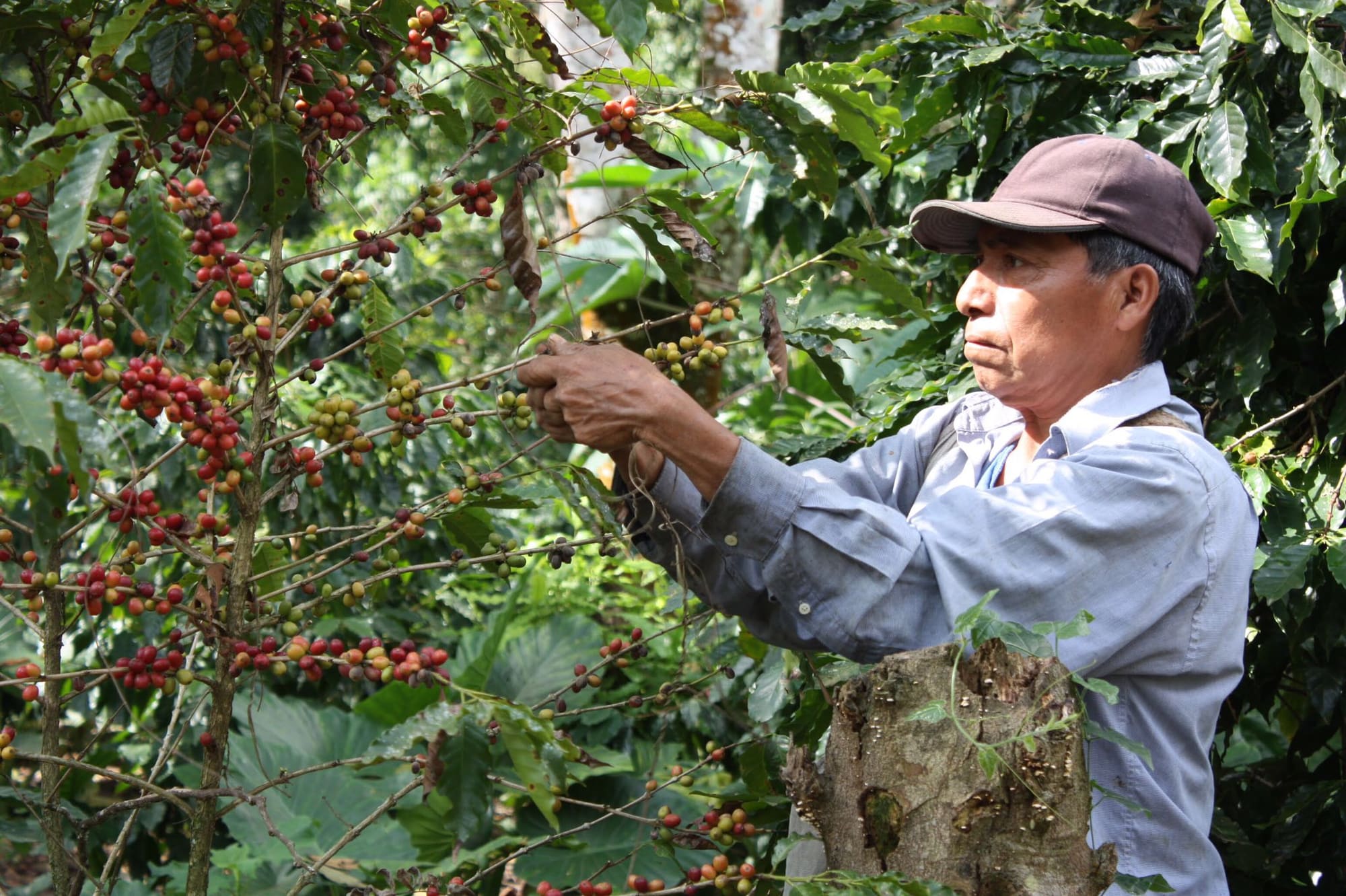
Related tour

Coffee Trail — Xilitla Coffee Farm by RZR
3.5–4 h, Departs 8:00–9:00 AM
$900MXN per person
Xilitla's high-altitude coffee (café de altura) is an Arabica grown at more than 800 meters above sea level, on the cloudy slopes of the Sierra Madre Oriental in the Huasteca Potosina. Xilitla is a municipality tucked into the mountains of San Luis Potosí, home to Teenek and Nahua Indigenous communities who have farmed this land for generations with techniques handed down over time. That gives this coffee a deep cultural identity on top of its quality in the cup. Many travelers come to Xilitla only for Edward James's Surrealist Garden and leave without tasting the most authentic thing this land produces: the high-altitude coffee that Huastec families have grown for decades. If that happened to you, this guide exists so it doesn't happen again.
Here you'll find the full story of how this exceptional bean is grown, processed and brought to your cup, plus information on local products that round out the region's food experience. In 2026, the Xilitla Coffee Fair (Feria del Café) holds its August edition with free admission, and our Coffee Journey (Travesía del Café), which goes up to the coffee farms, costs $900 MXN per person. That makes this one of the most affordable places in the Sierra Potosina to get to know coffee culture.
At huasteca-potosina.com we work with local guides and operators in the region. This guide is updated with real experiences from people who travel the Huasteca Potosina every week. Last updated: October 2026. Before you read on, book your guided tour in the Huasteca Potosina to get the most out of your visit.
The best high-altitude coffee farms in and around Xilitla
Which areas of Xilitla produce the best high-altitude coffee?
Xilitla's coffee farms are concentrated mainly in the communities of El Aguacate, La Morena and El Naranjal, where the altitude ranges from 800 to 1,200 meters. At that elevation, nighttime temperatures drop enough for the coffee to ripen slowly, developing bright acidity and distinctive floral notes. According to local operators, more than 300 farming families work plots of 1 to 5 hectares in this area in 2026, the vast majority under the shade of native trees.
The travelers we take to these farms always point out the same detail: seeing ripe red coffee cherries among the dark green jungle foliage is a sight you won't find in more industrialized coffee regions. The roads to the plots are dirt tracks you can drive in a four-wheel-drive vehicle, or you can walk 20 to 40 minutes from downtown Xilitla. Book the Coffee Journey, with pickup from your lodging in Xilitla, if you aren't traveling in your own vehicle.
Varieties grown: Typica, Bourbon and Garnica
The three main varieties in Xilitla are Typica, Bourbon and Garnica. Typica brings medium body and notes of sweet sugarcane. Bourbon, grown on the highest plots, offers citrus acidity and more complexity. Garnica is a Mexican hybrid developed by INMECAFE (the former Mexican Coffee Institute), adapted to the local microclimate, with greater resistance to coffee leaf rust and a more chocolatey profile. The main harvest season runs from November to February, though some plots with specific microclimates keep picking until March. Garnica plants grow at altitudes between 900 and 1,100 meters, and their yield per hectare is 20% higher than Typica's in years with regular rainfall. That makes it the most profitable bet for young growers in the area.
Knowing these differences turns a tasting at the source into something concrete, not just a tourist stop. If you want to dig into the local food scene before you arrive, check out the guide to restaurants in Xilitla 2026, which also lists coffee shops that serve only local beans.
From farm to cup: process and local products in Xilitla 2026
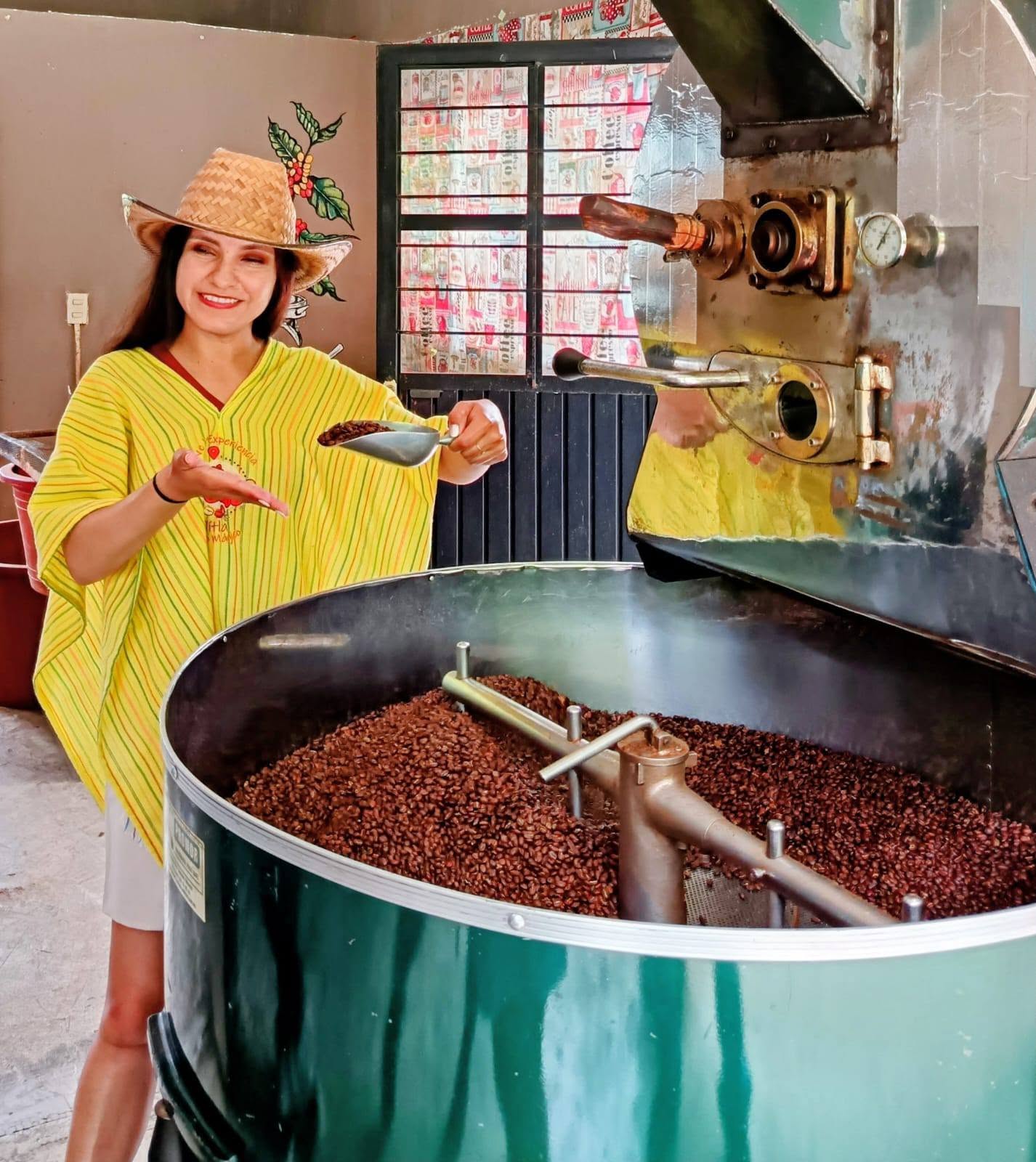
How is high-altitude coffee processed in Xilitla?
The groups we take to Xilitla's coffee mills (beneficios) each season are surprised to learn that most growers use the traditional washed method: the coffee is pulped the same day it's picked, ferments in wooden tanks for 24 to 36 hours, is washed with spring water and dried on concrete patios or raised African beds. This process respects the balance of acidity and sweetness in high-altitude coffee without industrial machinery. That explains the cup-to-cup consistency that sets Xilitla beans apart from coffees grown at lower elevations.
Keep in mind that during the rainy season — June to October — patio drying can take twice as long because of the humidity. That forces many growers to use mechanical dryers, which raise costs slightly. If you visit outside harvest season, the mills stay open for demonstrations with stored parchment coffee. See available tours in the Huasteca Potosina to check availability for your travel dates.
Prices and where to buy high-altitude coffee in Xilitla
At Xilitla's municipal market, locally roasted coffee sells for $120 to $180 MXN per 250 grams in 2026, depending on the process and variety. Specialty lots — with plot traceability and cupping analysis — can reach $300 MXN per 250 grams in artisan shops downtown. The market is open Monday through Sunday from 7:00 a.m. to 3:00 p.m., but Saturdays bring the most growers selling directly, and that's the best time to find freshly roasted beans at first-hand prices. Papán Huasteco, a go-to restaurant in the area, serves drinks made with beans roasted in the region. That makes it one of the best places to start learning the coffee's flavor profile before you buy.
During the Xilitla Coffee Fair 2026, held in August alongside the feast of Saint Augustine (San Agustín) — with the main celebration on August 28 — growers sell directly with no middlemen, which brings prices down 15 to 20% compared with the shops. Entry to the fairgrounds is free. To plan your visit ahead of time, see the perfect 3-day itinerary in Xilitla, where we make the Coffee Fair a must-stop in August.
Tips before visiting the coffee farms and enjoying Xilitla coffee
Preparing well for a visit to Xilitla's coffee farms makes the difference between a quick walk-through and an experience that shows you the work behind every bean. These are the tips we give every traveler we send to the coffee country of the Huasteca Potosina.
- Book ahead in August: The Coffee Fair falls during Xilitla's high season. Lodging near downtown sells out up to 3 weeks in advance. Check out hotels near Las Pozas to stay less than a 10-minute walk from the fairgrounds.
- Pair it with the Surrealist Garden: Admission to Edward James's Sculpture Garden costs $180 MXN per adult in 2026. You pay at the garden's ticket office on the day of your visit, after booking your time slot for free in the official system. The garden is open Wednesday through Monday, 9:00 a.m. to 6:00 p.m., with last entry at 4:00 p.m. — it's closed on Tuesdays. Plan the coffee farm for early morning and the garden for the afternoon.
- Bring clothes for mud and humidity: Coffee plots sit on steep slopes with clay soil. Rubber boots or sneakers with good grip are a must. Go through the packing checklist for the Potosí jungle before you pack.
- Choose certified local guides: The Coffee Journey costs $900 MXN per person, with pickup from your lodging in Xilitla, a guided walk through the coffee farm and a coffee tasting. A local guide explains the production process accurately and connects you directly with the growers, something an independent visit doesn't offer.
- Minimum cash budget: Bring at least $500 MXN in cash for purchases at the fair and tips for the growers. Most market stalls and coffee farms don't take cards. The nearest ATMs are in downtown Xilitla, and they're unreliable in high season.
How do you get to Xilitla to experience the high-altitude coffee route?
Xilitla sits in the Sierra Madre Oriental in the state of San Luis Potosí, at an altitude that lives up to the name of its coffee. The groups we organize from different cities confirm that the most comfortable route depends on where you start. Either way, the drive in is part of the trip: the road winds through canyons, jungle and fog.
Routes from major cities to Xilitla
From Mexico City, the most direct route follows federal highway 85 through Pachuca and Tamazunchale to the turnoff for Federal Highway 120, which climbs to Xilitla, in about 7 h under normal conditions. From Monterrey, the route heads down through Ciudad Victoria and Ciudad Valles, with an estimated time of ~7 h. From the state capital, San Luis Potosí, it's about 5 h via Rioverde and Jalpan: that route doesn't go through Ciudad Valles. See the guide on how to get to Xilitla from Mexico City, Monterrey and SLP for up-to-date details on tolls and road conditions.
Public transportation and getting there from Ciudad Valles
If you're not driving, Ciudad Valles is the connecting hub: from the bus station, vans (combis) and buses leave for Xilitla often between 6:00 a.m. and 4:00 p.m., for around $80 to $120 MXN per person, and the ride takes 1.5 to 2 hours. Keep in mind that the last return service from Xilitla to Ciudad Valles usually leaves before 6:00 p.m., so getting the schedule wrong can leave you without a ride. Read our road safety tips before you plan your transfer.
| Starting point | Estimated driving time | Details |
|---|---|---|
| Mexico City | 7 h | Highway 85 through Pachuca and Tamazunchale, then Federal Highway 120 to Xilitla |
| Monterrey | ~7 h | Through Ciudad Victoria and Ciudad Valles to Xilitla |
| San Luis Potosí (capital) | 5 h | Via Rioverde and Jalpan; doesn't go through Ciudad Valles |
Want to experience high-altitude coffee with an expert guide?
Tours from the Huasteca Potosina. Small groups, local guides and transportation included.
See available tours →Do you have your Huasteca itinerary yet?
We put the trip together for you: a hotel in Xilitla, tours and transportation in one package, with set dates and a firm price.
All-inclusive packages with a hotel in Xilitla →Frequently asked questions about high-altitude coffee
What makes Xilitla's high-altitude coffee special compared with other Mexican coffees?
Xilitla's high-altitude coffee is grown between 800 and 1,200 meters on the cloudy slopes of the Sierra Madre Oriental, so the beans ripen slowly and build up more sugars. The result is a flavor profile with bright acidity, floral notes and medium body that sets it apart from coffees grown at lower elevations. In 2026, more than 300 farming families grow it under native shade trees.
How much does high-altitude coffee cost in Xilitla in 2026?
Locally roasted coffee sells for $120 to $180 MXN per 250 grams at the municipal market. Traceable specialty lots go up to $300 MXN per 250 grams in artisan shops. During the Coffee Fair in August, prices drop 15 to 20% because growers sell directly to buyers. Entry to the fair is free.
When is the best time to visit Xilitla and the Coffee Fair?
The Xilitla Coffee Fair 2026 takes place in August, with the main celebration on August 28 in honor of Saint Augustine. Coffee harvest season runs from November to February, ideal for seeing the process in the field. For the most stable weather, see the guide to the weather and the best time to visit Xilitla.
Is it safe to visit Xilitla's coffee farms with kids or as a couple?
Yes. Coffee farm tours are suitable for families with children over 6 years old and for couples looking for quiet rural tourism. The most accessible routes don't take much physical effort. Local products such as roasted coffee, honey and homemade jams make the tour a complete food experience. Check out the article on Xilitla with kids for more details.
Can you join the coffee harvest during your visit?
Yes. Several growers in the communities of El Aguacate and La Morena open their plots so visitors can join in hand-picking the coffee cherries between November and February. The experience lasts 2 to 3 hours and includes an explanation of how the ripe cherries are selected. Some tours include it at no extra cost as part of the full-day package. If you're planning an independent visit, arrange it directly with the growers or through a certified local guide, so you're sure to get access and the activity doesn't disrupt the families' workday.
Book your experience in the Huasteca Potosina
Tours with local guides · Small groups · Stress-free
Or let us put together your whole multi-day trip.