Related tour

Surrealist Route — Edward James, Springs, Caves and Castle
8.5–9 h, Departs 8:00–9:00 AM
$1,500MXN per person
Xantolo in the Huasteca Potosina is the oldest and most deeply rooted Indigenous Day of the Dead celebration in northeastern Mexico, grounded in the Tének and Nahua worldview since before the Spanish Conquest. The Huasteca Potosina, which includes municipalities such as Aquismón, Tancanhuitz and Tamazunchale, spread between the mountains and the banks of the Tampaón River, is home to one of the most vibrant cultural traditions in the country, where each community keeps its own rituals with a continuity that surprises first-time visitors. Many travelers show up on November 2 expecting altars and parades, not knowing they've arrived late: the celebration is already over, or worse, they never fully understood it. Xantolo in the Huasteca Potosina isn't a one-day event; it's a ritual cycle that stretches over weeks and transforms entire communities.
This guide covers everything you need to plan a real trip to the Huasteca Day of the Dead in 2026: the exact Xantolo dates, the municipalities where the celebration is most intense, costs, the Dance of the Old Men (danza de los viejos) and how to get there from Ciudad Valles. According to local operators in the region, the number of outside visitors to Xantolo has grown in recent years, which makes planning ahead even more important.
At www.huasteca-potosina.com we work with local guides and tour operators in the region. This guide is updated with the real experiences of people who travel the Huasteca Potosina every week. Last updated: September 2026. Before you read on, book your guided tour in the Huasteca Potosina to lock in your dates and logistics in time.
What Xantolo is and why the Huasteca Potosina celebrates it differently
What is Xantolo, and when exactly is it celebrated?
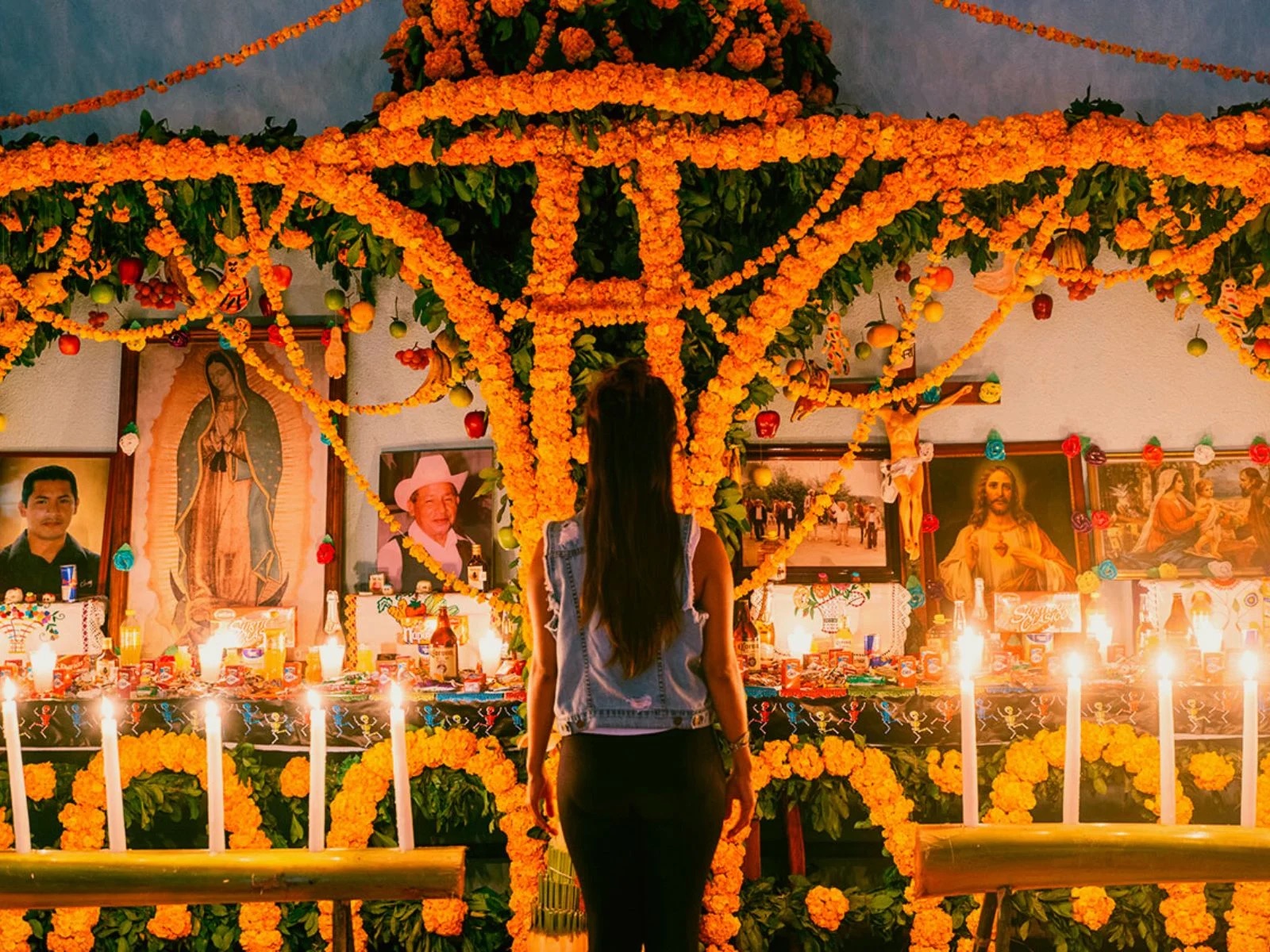
Xantolo is the Day of the Dead festival of the Tének (Huastec) and Nahua peoples of the Huasteca, and its name comes from the Latin Sanctorum, adopted during colonial-era evangelization. The official Xantolo dates run from October 30 to November 2, but the real ritual cycle starts in late September with the preparation of altars, marigold (cempasúchil) arches and offerings that vary by type of deceased: children, adults and people who died in accidents each have their own days.
The travelers we bring to the region always confirm the same thing: people who arrive only on November 2 miss the heart of the celebration. The most moving moments—the arrival of the souls in their homes, the vigils in cemeteries and the first parades of comparsas (costumed dance troupes)—happen between October 31 and November 1. Book your guided tours at least three weeks in advance for these dates.
The Dance of the Old Men: the ritual heart of Xantolo
The Dance of the Old Men—known locally as cuacuahtines or simply "los viejos"—is the most iconic element of Xantolo in the Huasteca Potosina. The dancers wear hand-carved wooden masks of elderly faces, dress in farmworker clothes and perform a choreography that parodies old age and death, but with humor and a sense of spiritual communion. Each comparsa can have between 10 and 40 members, and they make their way through the streets from town to town for several days in a row.
Watching the Dance of the Old Men in a family courtyard—not on a tourist stage—is possible if you arrive with a local operator who has real community ties. Municipalities such as Aquismón, Tancanhuitz and Tamazunchale offer the most authentic version, far from the city parade in Ciudad Valles. See our selection of Huasteca traditions and music to better understand the context of this dance before you see it.
Xantolo 2026 activities, experiences and costs in the Huasteca Potosina
What can you see and do during Xantolo?
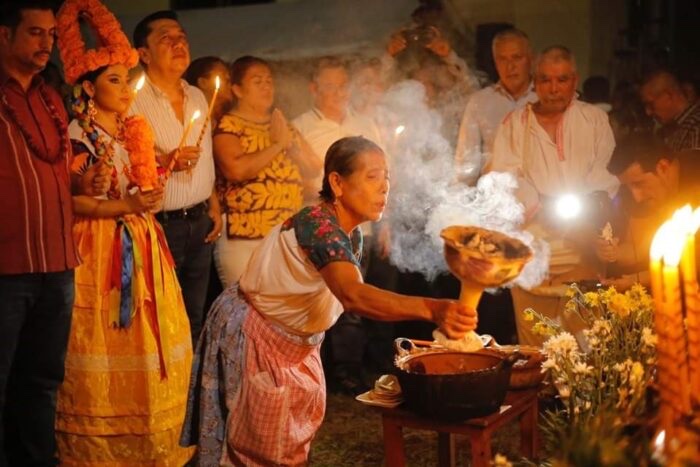
People who experience the Huasteca Day of the Dead come back with a long list of moments they didn't expect: multi-tiered home altars decorated with arches of fresh marigolds and purple papel picado (cut-paper banners); cemeteries lit by hundreds of candles in the early hours of November 1; community kitchens where zacahuil (a giant tamale) and bean tamales are made for the offerings; and comparsa parades moving to live huapango music. All of this happens at the same time and all over the region: there's no single stage, but dozens of active spaces at once. According to certified local guides in the region, many comparsas take an active part in the municipality of Aquismón during the main days of Xantolo 2026. The main parades in Aquismón start around 10:00 a.m. and go on until past midnight on November 1, with the most intense moments between 8:00 p.m. and 11:00 p.m.
An honest word about access: celebrations in small Indigenous communities call for respect and discretion. Photographing altars or dances without permission is a serious offense that can create tension with your hosts. If you go with a responsible local operator, they'll arrange that access for you. See the guided tours for the festival days or the days before and after.
How much does it cost to experience Xantolo in the Huasteca Potosina?
Xantolo's street celebrations are free: comparsa parades, altars in public spaces and cemeteries have no admission fee. Visits to nearby archaeological or natural sites have their own admission: the Tamtoc Archaeological Zone, which for now opens only on Sundays, is free for Mexican nationals and ~$95 MXN for foreigners, and the Tamasopo Waterfalls (Cascadas de Tamasopo) charge $60 MXN. The comparsas and public altars are free: the festival isn't something you can buy. What we can help you put together is the rest of the trip: tours priced per person range from $900 MXN to $1,950 MXN, and for the big night, the guided Xantolo Night costs $990 MXN per person, without hotel (Xilitla fills up on those dates).
If you want to combine Xantolo with other experiences in the region, the complete 2026 budget for traveling to the Huasteca Potosina breaks down every possible expense, from lodging to food and outdoor activities.
Practical tips before experiencing Xantolo in the Huasteca Potosina
Preparing well for a Xantolo trip to the Huasteca Potosina makes the difference between being a confused spectator and a visitor who truly understands what they're seeing. These recommendations come from coordinating groups of travelers in the region, season after season, during the Xantolo cycle.
- Arrive by October 31 at the latest: The cemetery vigils and the first comparsa parades with the Dance of the Old Men happen on the night of October 31 into November 1. Arriving on November 2 means missing the most intense part.
- Stay in small towns: Ciudad Valles has more infrastructure, but Aquismón or Tancanhuitz offer real immersion. Look into lodging options near the Huasteca Potosina early so you don't end up without a place to stay.
- Hire a certified local guide: Access to private rituals and Indigenous communities is only possible through someone trusted in the area. The comparsas don't require a tour: they're free and in each town's plaza. What we do take care of is everything else: lodging in Xilitla, transportation from your city and guided tours to fill your days.
- Pack warm clothes for the nights: Temperatures in the Huasteca Potosina drop considerably after dark in November, especially in higher-altitude municipalities like Xilitla. Check the packing checklist for the jungle of San Luis Potosí.
- Bring enough cash: ATMs are scarce in small towns. We recommend carrying at least $1,500 MXN in cash for food, voluntary donations at cemeteries and local crafts during Xantolo.
How do you get to Xantolo in the Huasteca Potosina from major cities?
Xantolo in the Huasteca Potosina is celebrated across several municipalities, which means there's no single place to arrive. Ciudad Valles works as the main hub: it has a bus station and direct road connections to the municipalities that are most active during Xantolo. The groups we organize usually use Ciudad Valles as a base and from there travel by private vehicle or organized tour to the centers of the celebration.
Distances and travel times from Ciudad Valles to the Xantolo towns
Aquismón—one of the municipalities with the most comparsas and Dance of the Old Men troupes—is ~1 h from Ciudad Valles on a federal highway in good condition. Tamazunchale, at the southern end of the Huasteca Potosina and with a deeply rooted Xantolo tradition, is 2 hours away. Xilitla, which also celebrates the Huasteca Day of the Dead with its own rituals, is 1 h 30 min from Ciudad Valles. From Mexico City, you can reach Ciudad Valles in 6.5 to 7 h via Highway 85D. From Monterrey, the drive takes roughly ~6 h. For more route details, see the route guide from Mexico City, Monterrey and SLP.
Should you rent a car or take a tour during Xantolo?
During the main Xantolo dates—October 31 to November 2—secondary roads to Indigenous communities may be blocked by parades or crowds. Renting a car gives you flexibility, but without local knowledge it's easy to arrive late or end up in the wrong place. Going with someone from the area solves the logistics and opens the door to events that aren't on any map. The road safety guide for the Huasteca has concrete tips if you decide to drive yourself.
| Transportation option | Price / time | Details |
|---|---|---|
| Car rental from Ciudad Valles | $700–$1,200 MXN/day | Total freedom; you need to know the routes; gas not included |
| Bus + local mototaxi | $80–$200 MXN per leg | Cheap but slow; impractical for remote municipalities on high-demand dates |
Want to add guided tours to your Xantolo trip?
Tours from the Huasteca Potosina. Small groups, local guides and transportation included.
See available tours →Do you already have your Huasteca itinerary?
We plan the trip for you: hotel in Xilitla, tours and transportation in one package, with set dates and a firm price.
All-inclusive packages with a hotel in Xilitla →Frequently asked questions about Xantolo in the Huasteca Potosina
What are the exact dates of Xantolo in the Huasteca Potosina in 2026?
The main Xantolo dates run from October 30 to November 2, 2026. The most moving day is November 1, when families hold vigils for deceased adults in the cemeteries, with candles, flowers and music. Community preparations start in late September.
How much does it cost to take part in Xantolo in the Huasteca Potosina?
The public Xantolo celebrations in the Huasteca Potosina are free. Watching the festival costs nothing; if you want to add guided tours, the ones priced per person range from $900 MXN to $1,950 MXN. Bring at least $1,500 MXN in cash for local expenses.
Which city is the best starting point for Xantolo, and how long is the trip?
Ciudad Valles is the ideal base. From Mexico City it's 6.5 to 7 h by highway; from Monterrey, roughly ~6 h by car. Aquismón is ~1 h from Ciudad Valles and Xilitla is 1 h 30 min away. The municipalities with the most Huasteca Day of the Dead activity are all within 2 hours of Ciudad Valles.
Is Xantolo in the Huasteca Potosina safe for families and couples?
Xantolo in the Huasteca Potosina is a family celebration by nature: children, seniors and foreign visitors take part every year without incident. We recommend going with a local guide, respecting private ritual spaces and not taking photos without permission. For families with children, the comparsa parade in Ciudad Valles is the most accessible and safest way to experience it.
What languages are spoken during Xantolo, and do I need to know any to take part?
In most of the municipalities where Xantolo is celebrated in the Huasteca Potosina, Spanish, Tének and Nahuatl are spoken side by side. At public events—comparsa parades, cemeteries, offering markets—Spanish is enough to get by. In small rural communities, however, elders and some families often speak mainly Tének. Having a local guide who speaks the Indigenous language makes it much easier to access private rituals and builds a bond of trust with your hosts that you can't get any other way.
What traditional food is made during Xantolo, and where can I try it?
Food is an inseparable part of Xantolo in the Huasteca Potosina. The most representative dishes, prepared as offerings and shared among families, are zacahuil—a giant tamale made with coarse corn dough and cooked in an earth oven—, black bean tamales with chile, stuffed bocoles (thick corn-dough patties) and corn atole (a warm corn drink). In the markets of Aquismón and Tancanhuitz you'll usually find community stalls selling these dishes starting October 30, at prices ranging from $20 to $80 MXN per piece. Trying these foods in the context of Xantolo itself, and not at a tourist restaurant, is an essential part of understanding the celebration.
Book your Huasteca Potosina experience
Tours with local guides · Small groups · Stress-free
Or let us put together your complete multi-day trip.